
Workplace safety is one of the most crucial aspects of any engineering, oil & gas, and industrial construction project. A single accident can result in injuries, loss of productivity, expensive legal consequences, and severe damage to a company’s reputation. For industries that involve heavy machinery, hazardous materials, and complex processes, prioritizing industrial safety is not an option—it’s a necessity.
In East Africa, particularly in Tanzania, industrial growth is accelerating with massive investments in oil & gas, infrastructure, and energy sectors. This growth creates new opportunities but also introduces greater risks if safety is not adequately managed. In this article, we will explore nine powerful strategies to reduce workplace accidents, ensure employee well-being, and keep projects on track, while showcasing how Etago Company Limited provides innovative engineering and safety solutions to meet these challenges.
Understanding the Importance of Industrial Safety
Industrial safety is not merely about compliance; it’s about creating a safety culture that protects workers, enhances productivity, and saves money in the long run. A safe workplace reduces absenteeism, prevents costly delays, and improves employee morale.
Many Tanzanian and East African companies face similar challenges: limited safety training, outdated equipment, and inadequate safety protocols. By applying best practices and investing in advanced safety solutions, businesses can achieve international safety standards while increasing efficiency.
The Economic Impact of Workplace Accidents
Workplace accidents do more than harm employees—they disrupt entire supply chains. Studies reveal that companies with poor safety records spend significantly more on insurance premiums, medical costs, and legal liabilities. Additionally, downtime due to accidents can delay projects, causing financial strain and damaging client relationships.
In East Africa’s competitive industrial landscape, safety excellence is a business advantage. Companies that prioritize safety demonstrate professionalism and reliability, making them more attractive to international investors and partners.
Strategy 1: Comprehensive Safety Training and Awareness
Training is the foundation of workplace safety. Workers must understand how to operate equipment, handle hazardous materials, and respond to emergencies. Companies should invest in regular training programs tailored to their industry, incorporating both classroom instruction and hands-on practice.
Safety awareness campaigns, toolbox talks, and refresher courses ensure that safety knowledge is continuously reinforced. By empowering employees with the right skills, companies can reduce accidents caused by human error.
Strategy 2: Implementing Strong Safety Management Systems (SMS)
A Safety Management System (SMS) is a structured framework for managing safety risks. It includes hazard identification, risk assessments, performance monitoring, and continuous improvement processes.
Adopting an SMS that complies with international standards, such as ISO 45001, demonstrates a company’s commitment to safety. It helps create a proactive safety culture where risks are identified and mitigated before incidents occur.
Strategy 3: Conducting Regular Safety Audits and Inspections
Regular audits are essential to identify gaps in safety protocols. Inspections should cover machinery, electrical systems, scaffolding, storage areas, and personal protective equipment (PPE).
In industries such as oil & gas, inspections must also include tank integrity checks, hydro testing, and non-destructive testing (NDT). Partnering with experienced companies like Etago ensures thorough audits and compliance with safety regulations, reducing accident risks.
Strategy 4: Prioritizing Equipment Maintenance and Upgrades
Poorly maintained machinery is a leading cause of industrial accidents. Companies should implement preventive maintenance schedules to ensure equipment is operating safely and efficiently.
Upgrading old equipment with modern, automated systems can further reduce human error. Smart monitoring devices and predictive maintenance technologies are becoming essential in industrial safety management.
Strategy 5: Enforcing Proper Use of Personal Protective Equipment (PPE)
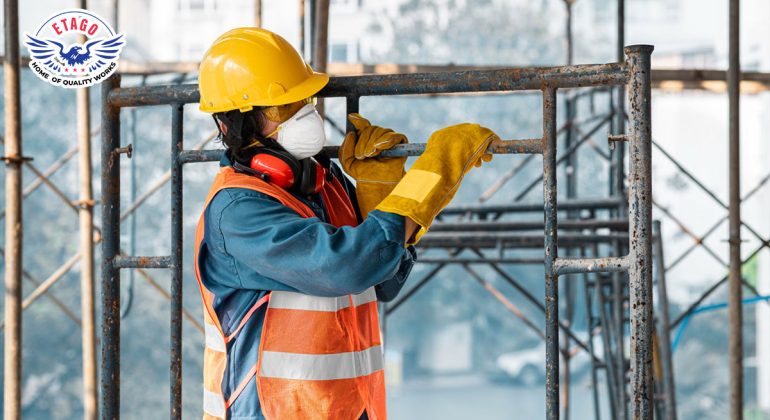
PPE is the first line of defense against workplace hazards. Employers must ensure that workers have access to appropriate PPE, including helmets, gloves, respirators, and fire-resistant clothing.
However, simply providing PPE is not enough. Training workers on proper usage, storage, and maintenance of safety gear is equally important. Supervisors should enforce strict PPE compliance to protect workers from avoidable injuries.
Strategy 6: Emergency Response Planning and Drills
Industrial sites must have well-documented emergency response plans to handle fire outbreaks, chemical spills, and equipment failures. Regular emergency drills help employees react quickly and confidently during real incidents.
By investing in fire suppression systems, spill containment solutions, and first-aid training, businesses can minimize damage and save lives.
Strategy 7: Integrating Technology for Safety Monitoring
Technological innovations have transformed workplace safety. IoT-enabled sensors, drones, and real-time monitoring systems allow companies to detect hazards instantly. For instance, sensors can alert workers to toxic gas leaks or excessive equipment vibrations, preventing accidents before they occur.
Etago leverages advanced inspection and testing equipment to deliver precise safety assessments, helping industries maintain world-class safety standards.
Strategy 8: Building a Safety-First Culture
Safety should be a company-wide value, not just a management directive. Workers are more likely to follow safety procedures if they feel their well-being is a priority. Leaders must lead by example, reward safe behavior, and encourage open reporting of safety concerns without fear of punishment.
Strategy 9: Partnering with Safety-Focused Engineering Experts
Industrial safety requires specialized expertise. Companies that partner with engineering service providers like Etago gain access to advanced safety solutions, including tank inspections, NDT services, and project safety management.
Etago combines years of industry experience with modern technology, delivering engineering solutions that prioritize both performance and safety.
How Etago Company Limited Supports Industrial Safety
Etago Company Limited is a trusted engineering and industrial solutions provider in Tanzania and East Africa. The company offers:
-
Engineering design, construction, and maintenance for industrial facilities.
-
Tank inspections, hydro testing, and NDT services for oil & gas infrastructure.
-
Project management, commissioning, and refurbishment for industrial plants.
-
Advanced safety audits and inspection services to help companies meet regulatory requirements.
Etago’s team of skilled engineers and technicians ensures safety excellence through a combination of modern technologies, rigorous training, and strict adherence to international safety standards.
Conclusion
Industrial safety is not a one-time effort—it’s a continuous process that requires leadership commitment, employee engagement, and expert support. By adopting these nine strategies, companies in Tanzania and across East Africa can significantly reduce workplace accidents, improve productivity, and achieve sustainable growth.
Partnering with Etago Company Limited gives businesses a competitive edge, ensuring safety compliance while optimizing operational efficiency.
FAQs
-
What is the main cause of workplace accidents in industrial sectors?
Most accidents are caused by human error, poor equipment maintenance, and lack of proper safety training. -
Why is safety training important in industrial workplaces?
Training equips workers with knowledge and skills to handle equipment safely, respond to emergencies, and prevent accidents. -
How can technology improve industrial safety?
Technology like IoT sensors, drones, and predictive maintenance systems detects hazards early and improves safety management. -
What role does Etago play in improving workplace safety?
Etago provides engineering solutions, safety audits, tank inspections, and project management to ensure compliance and reduce risks. -
How often should safety inspections be conducted?
Inspections should be conducted regularly, with high-risk equipment and sites inspected at least monthly, or more frequently as needed.