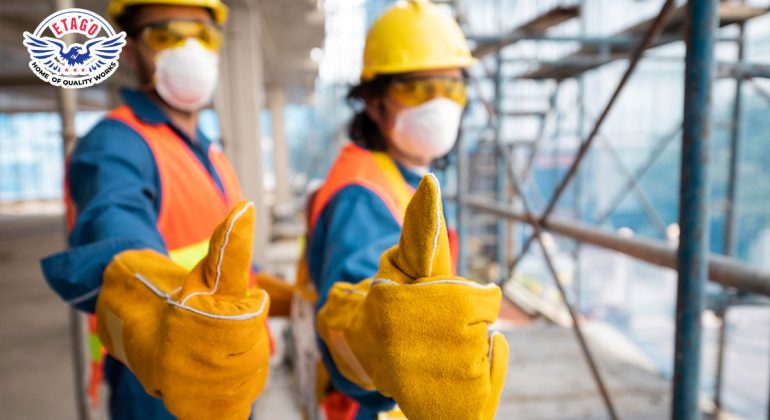

Workplace safety is at the heart of every successful engineering, oil & gas, and industrial construction project. Across Tanzania and East Africa, industries are evolving rapidly, adopting new technologies to reduce accidents, enhance operational efficiency, and protect workers. Safety is no longer just about meeting regulatory requirements—it’s about embracing innovation and creating a culture where every employee goes home safe every day.
In this article, we’ll explore five groundbreaking innovations that are reshaping industrial safety standards in 2025, with practical insights for businesses in the region. We’ll also discuss how Etago Company Limited is leading the charge in engineering excellence, safety innovation, and project delivery for the oil & gas and industrial sectors.
The Growing Importance of Safety in Industrial Projects
As infrastructure projects expand in East Africa, so do the risks. From oil refineries and pipelines to large-scale construction projects, workers face hazards like heavy machinery, high-pressure systems, hazardous chemicals, and confined spaces.
Industrial safety is no longer reactive—it’s proactive. Forward-thinking companies are investing in innovative solutions to minimize risks, reduce downtime, and save lives. Safety improvements also contribute to higher productivity, stronger employee morale, and a positive reputation among clients and regulatory bodies.
Innovation 1: Smart Wearable Technology for Real-Time Safety Monitoring
One of the biggest shifts in workplace safety is the rise of smart wearables. These devices, equipped with sensors and IoT connectivity, provide real-time data on workers’ health and environmental conditions.
Examples include:
-
Helmets with integrated GPS and temperature sensors to track worker locations and detect heat stress.
-
Smart vests with built-in biometric sensors that monitor heart rates and alert supervisors of potential health issues.
-
Connected safety boots that detect slips, falls, and proximity to heavy machinery.
These devices help companies respond instantly to hazards, improving rescue times and preventing fatalities.
Innovation 2: Robotics and Drones for Hazardous Task Management
Industrial work often involves tasks in dangerous areas—such as inspecting oil tanks, welding at great heights, or monitoring pipelines. Robotics and drones are now replacing humans in these high-risk environments.
Applications include:
-
Drones conducting tank inspections without the need for scaffolding.
-
Robotic arms performing precision welding in confined spaces.
-
Automated crawlers inspecting pipelines for leaks or corrosion.
By reducing human exposure to risk, robotics and drones not only protect workers but also save time and resources.
Innovation 3: AI-Powered Predictive Safety Analytics
Artificial Intelligence is transforming safety by predicting accidents before they happen. Predictive safety analytics use historical data, environmental factors, and machine learning to detect patterns that may indicate potential hazards.
Examples of AI applications:
-
Predicting equipment failures based on vibration and temperature readings.
-
Analyzing worker movement to identify unsafe behaviors.
-
Mapping high-risk areas on worksites for better safety planning.
These AI-driven solutions allow companies to act proactively, preventing accidents rather than simply reacting to them.
Innovation 4: Virtual Reality (VR) and Augmented Reality (AR) Safety Training
Traditional safety training often struggles to replicate the complexity of real-life industrial environments. Virtual Reality (VR) and Augmented Reality (AR) have changed that, offering immersive training programs where workers can practice emergency responses in realistic, simulated scenarios.
Benefits include:
-
Training workers in dangerous tasks without exposing them to real-world risks.
-
Reducing training costs by minimizing downtime.
-
Increasing retention of safety protocols through hands-on simulation experiences.
Innovation 5: Advanced Fire Suppression and Gas Detection Systems
Industrial fires and gas leaks remain major threats in oil & gas and heavy engineering environments. The latest innovations in fire suppression and gas detection technology are designed to catch threats early and respond faster than ever.
Key advances include:
-
Early-warning multi-sensor fire detection systems.
-
Automated suppression systems that deploy foam, water mist, or inert gas.
-
IoT-enabled gas detectors that continuously monitor the air for toxic or flammable gases.
With these innovations, companies can significantly reduce catastrophic accidents and improve worker confidence.
How East Africa Is Adopting Industrial Safety Innovation
The East African market is rapidly adopting these technologies as industries modernize and competition increases. Companies are realizing that safety is an investment, not a cost. Tanzania, Kenya, and Uganda are seeing a surge in oil & gas projects, renewable energy developments, and large-scale industrial construction—all requiring world-class safety standards.
Etago’s Commitment to Safety and Innovation
Etago Company Limited stands at the forefront of engineering excellence in Tanzania and East Africa. With expertise spanning engineering design, construction, maintenance, and oil & gas infrastructure development, Etago integrates modern safety solutions into every project.
Our safety-driven services include:
-
Tank Inspections, Hydro Testing, and NDT Services: Ensuring asset integrity with precision testing and advanced inspection technology.
-
Industrial Construction and Refurbishment: Delivering safe and reliable construction solutions for heavy industries.
-
Project Management and Commissioning: Coordinating all project phases with strict safety oversight.
-
Innovative Safety Solutions: Incorporating robotics, predictive analytics, and smart technologies into industrial operations.
Etago’s reputation is built on quality, safety, and innovation, ensuring that clients meet global safety standards while maintaining operational efficiency.
The Role of Regulations in Driving Safety
East African safety regulations are evolving to align with international standards. Companies that prioritize compliance with OSHA (Occupational Safety and Health Administration) guidelines, ISO standards, and regional safety codes not only avoid penalties but also gain trust from global investors and partners.
The ROI of Investing in Industrial Safety
Investing in safety innovations is not just about compliance; it’s about profitability. Companies that prioritize safety see fewer worksite delays, lower insurance costs, and higher employee productivity. A safe worksite also reduces turnover rates, saving recruitment and training expenses.
Building a Safety-First Culture
Technology is only part of the equation. Building a safety-first culture requires strong leadership, effective communication, and continuous employee training. Leaders must demonstrate commitment by empowering workers to report hazards without fear of punishment.
Future Trends in Industrial Safety
Looking beyond 2025, we can expect even more advanced AI systems, wearable exoskeletons to prevent injuries, and fully autonomous construction machinery. As the digital transformation continues, industrial safety will increasingly rely on data-driven decision-making and automation.
Why Businesses Should Partner with Etago
By partnering with Etago, companies gain access to cutting-edge solutions, world-class expertise, and a trusted partner in safety and engineering innovation. Whether you’re building oil pipelines, upgrading manufacturing facilities, or managing large-scale industrial projects, Etago provides end-to-end solutions tailored to your needs.
Conclusion
Industrial safety in 2025 is about innovation, integration, and a commitment to people. The technologies shaping worksite safety today will save lives, increase efficiency, and drive business growth tomorrow. By investing in smart wearables, robotics, AI analytics, VR training, and advanced detection systems, companies in Tanzania and East Africa can lead the way in creating safer, more productive workplaces.
Etago Company Limited remains your trusted partner in achieving these goals, offering engineering, construction, and oil & gas expertise backed by a strong culture of safety and innovation.
FAQs
1. What is the most important safety innovation for industrial worksites in 2025?
Smart wearable technology is emerging as the most crucial innovation because it provides real-time health and safety monitoring, enabling immediate response to potential hazards.
2. How does AI improve safety in oil & gas industries?
AI identifies risk patterns, predicts equipment failures, and provides data-driven insights to help companies take preventive action before accidents occur.
3. Why is VR safety training better than traditional training methods?
VR creates immersive environments where workers can experience real-life hazards safely, improving knowledge retention and decision-making skills.
4. Can Etago assist with both construction and maintenance services?
Yes. Etago specializes in end-to-end solutions, from project design and construction to long-term maintenance and safety inspections.
5. Are these safety innovations affordable for East African companies?
While initial investments may seem high, the long-term cost savings from reduced accidents, downtime, and insurance premiums make them highly cost-effective.