
Understanding the Lifecycle of Oil TerminalsFrom Construction to Refurbishment
Meta Description
Discover the full lifecycle of oil terminals, from engineering design and construction to inspection, maintenance, and refurbishment. Learn how Etago Company Limited supports East Africa’s oil and gas infrastructure.
Introduction: Why Oil Terminals Matter in East Africa
Oil terminals are critical assets in the energy supply chain, especially in East Africa where logistics, transport, and fuel security are pivotal. Understanding their lifecycle helps optimize performance, reduce failures, and ensure environmental and operational safety.
The Oil Terminal Lifecycle at a Glance
What Are Oil Terminals?
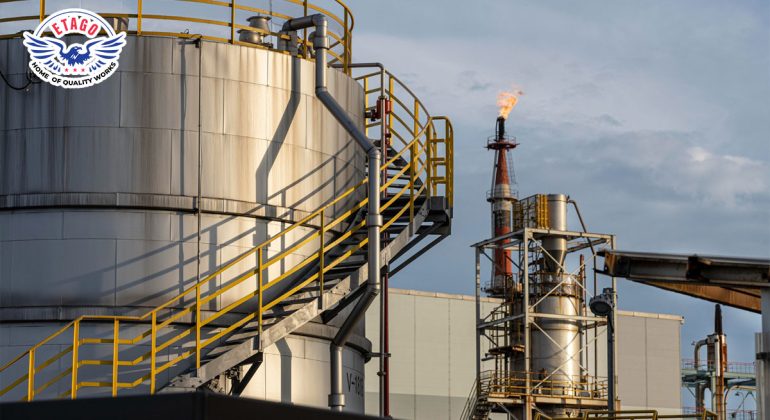
Oil terminals are facilities where petroleum products are received, stored, and distributed. They serve refineries, import/export hubs, and local fuel distribution networks.
Why Lifecycle Management Is Essential
Lifecycle management ensures safety, efficiency, compliance, and sustainability from design to decommissioning.
Phase 1 – Engineering Design and Planning
Site Selection and Environmental Assessments
Choosing the right location based on logistics, environmental regulations, and soil/geotechnical factors is foundational.
Engineering Design and Technical Drawings
Structural and mechanical blueprints are developed, accounting for tank capacity, piping layouts, safety zones, and fire suppression systems.
Regulatory Approvals and Permits
Navigating local and international standards, including OSHA, API, and environmental regulations.
Phase 2 – Construction and Installation
Civil and Structural Works
Includes foundation laying, bund wall construction, access roads, and perimeter fencing.
Tank Fabrication and Erection
Installing storage tanks using high-grade steel and welding procedures that meet API 650 standards.
Mechanical and Piping Works
Includes installation of pumps, valves, piping networks, and interconnecting systems.
Phase 3 – Commissioning and Operational Readiness
Testing and Calibration
Hydro testing, pressure testing, and instrumentation calibration are conducted to verify integrity and functionality.
Safety Systems Verification
Firefighting systems, alarms, gas detectors, and emergency response drills are evaluated.
Initial Product Loading and Operational Ramp-Up
Gradual loading and monitoring ensure smooth operation and identify any early faults.
Phase 4 – Operation and Maintenance (O&M)
Routine Inspection Protocols
Daily, weekly, and monthly checks on tanks, valves, pumps, and pipelines.
Predictive and Preventive Maintenance
Use of sensors, data analytics, and schedules to prevent failures before they occur.
Non-Destructive Testing (NDT)
Ultrasound, magnetic particle, and radiographic tests detect internal flaws without damaging the equipment.
Phase 5 – Expansion or Upgrades
Capacity Upgrades
Expanding tank storage, pipeline diameter, or pumping capacities to meet demand.
Automation and Digitalization
SCADA systems and IoT sensors enhance remote monitoring and operational efficiency.
Environmental Enhancements
Upgrading to double-walled tanks, vapour recovery systems, and leak detection sensors to reduce environmental impact.
Phase 6 – Refurbishment and Life Extension
Structural Rehabilitation
Repairing tank shells, foundations, and bund walls to extend service life.
System Retrofitting
Updating mechanical and electrical systems for compliance and performance.
Compliance and Recertification
Ensuring refurbished systems meet updated standards and regulatory requirements.
Etago Company LimitedYour Partner in Oil Terminal Excellence
Our Engineering and Construction Capabilities
From foundation to commissioning, Etago delivers integrated design-build services across East Africa.
Expertise in Tank Inspections and NDT
Etago provides API-standard tank inspections, hydro testing, and advanced NDT techniques to ensure structural integrity.
Turnkey Solutions for Refurbishment and Upgrades
We offer end-to-end solutions for terminal modernization, capacity expansion, and digital transformation.
Commitment to Safety and Innovation
Etago prioritizes safety, sustainability, and technological innovation in every project we deliver.
ConclusionBuilding the Future of East Africa’s Oil & Gas Infrastructure
Oil terminals play a pivotal role in fueling economies. Proper lifecycle management not only prevents failures but also enhances reliability and ROI. Partnering with experts like Etago ensures every phase meets world-class standards.
FAQs
What is the average lifespan of an oil terminal?
With proper maintenance and refurbishment, an oil terminal can last 30 to 50 years.
How often should oil terminals be inspected?
Critical systems should be inspected monthly, with comprehensive inspections annually or biennially.
What are the most common causes of oil terminal failures?
Corrosion, structural fatigue, poor maintenance, and outdated technology are leading causes.
Can oil terminals be upgraded instead of rebuilt?
Yes, many components can be retrofitted or expanded to increase capacity and compliance.
How can Etago help in oil terminal refurbishment?
Etago offers inspection, engineering redesign, NDT, mechanical upgrades, and regulatory compliance support to extend facility lifespan.